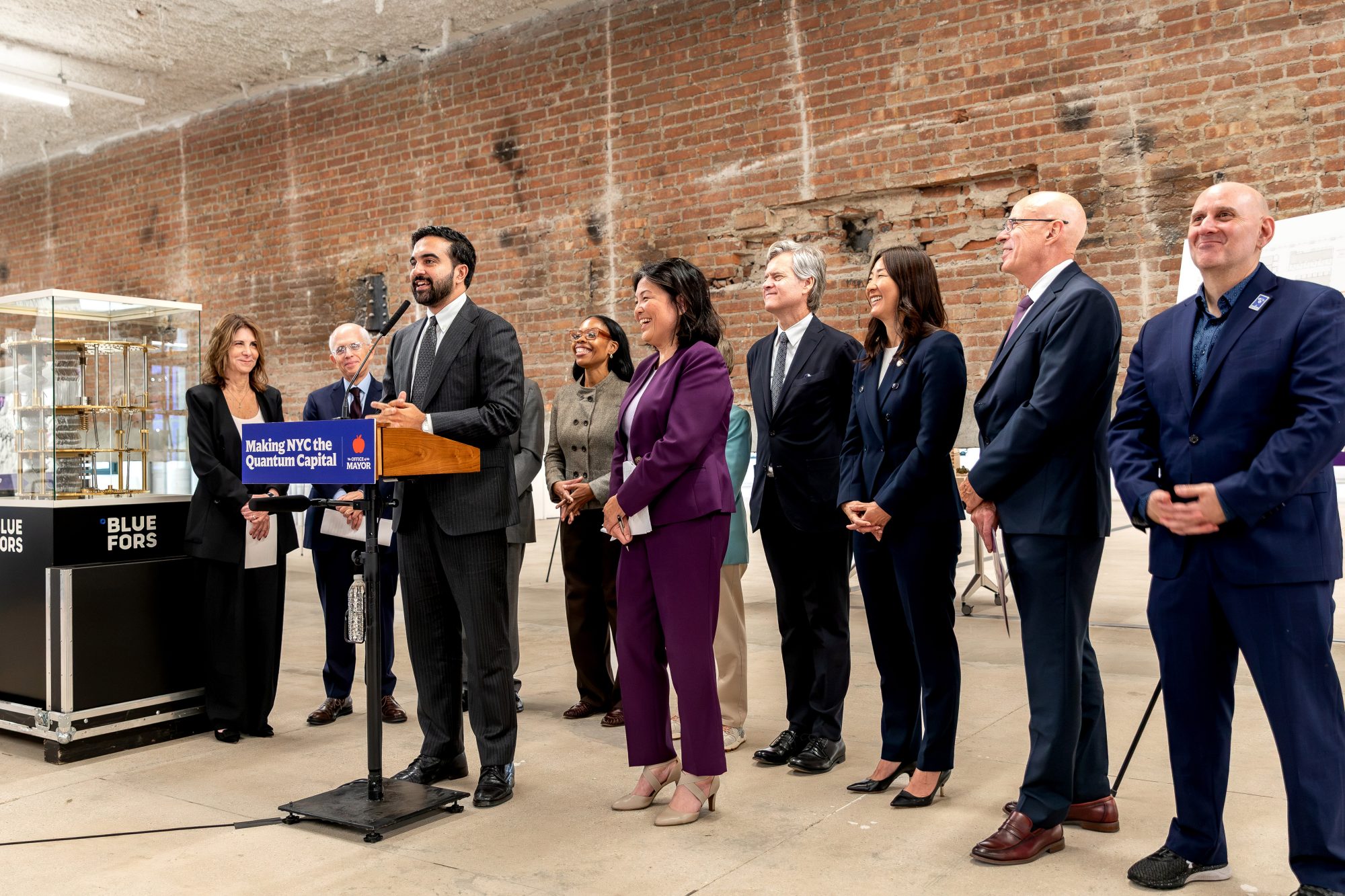
“When the public invests in a new technology at the start, the public should share in the success. With this agreement, we are setting a new standard for economic development in our city. This is exactly what we mean when we say economic justice and economic growth go hand in hand,” said Deputy Mayor Su. “Technology is not something that just happens to us. When the City invests in emerging industries, it also gives us the power to shape what that technology is developed for. We are excited to work with NYU to create good jobs for New Yorkers to the benefit of New Yorkers.”
“NYU’s QFab is exactly the kind of economic development investment New York City should be making, bringing together government, universities and industry to turn breakthrough research into real-world opportunities,” said NYCEDC President & CEO Shorris. “QFab will drive economic growth by helping create new companies, good-paying jobs and career pathways while ensuring the public shares in the intellectual property and economic value it generates. By investing in the infrastructure, partnerships, and talent that emerging industries need to grow, we’re strengthening New York’s innovation economy and ensuring more New Yorkers benefit from its success.”
“This announcement is a powerful example of what can happen when higher education, government, and industry work together to invest in the future. This initiative builds on CUNY's ongoing efforts to bring emerging technologies into the classroom and connect our students to high-growth careers,” said CUNY Chancellor Félix V. Matos Rodríguez. “By expanding access to world-class quantum facilities, training programs, and research opportunities, we are ensuring that the benefits of this technological revolution reach communities across New York City. Together with NYU and our partners in government and industry, we are helping make New York a premier quantum technology hub and a model for innovation in service to the public good.”
The New York City region is home to one of the largest concentrations of quantum scientists and engineers in the world. 770 Broadway will be the catalyst for new discoveries that propel us to the next level. What will make our new quantum facility truly unique is how connected it will be with the city around it. Through our partnership with the City, thousands of CUNY students will train alongside our NYU students on cutting-edge equipment and build their research careers in one of the fastest growing scientific fields. New York City-based start-ups and companies will have access to cutting-edge fabrication and materials found in few other cities,” said NYU President Linda Mills. “This is going to be the launchpad for an entire new industry with enormous opportunities for New Yorkers.”
"Quantum won't be built by any one institution working alone,” said Juan de Pablo, Anne and Joel Ehrenkranz Executive Vice President for Global Science and Technology and the executive dean of the NYU Tandon School of Engineering. “QFab brings research, industry, and hands-on training together under one roof to create one of the most advanced fabrication facilities in the nation. Importantly, this is a facility that will fuel job creation not only for those with advanced degrees, but for technicians, fabricators, and engineers at all levels that this field demands. This is our chance to make sure that as the quantum industry takes shape, it takes shape here, so the NYU and CUNY students training in our labs today can forge careers right here in New York, tomorrow. The quantum future is coming whether New York builds it or not. Today we make sure it’s built here in New York City, by New Yorkers from all five boroughs."
About the Quantum Fabrication Facility
Expected to open in 2030, QFab will deepen New York City’s position as the global leader in quantum technology — new technology that utilizes quantum mechanics. Quantum technology will revolutionize fields ranging from life sciences to finance to health care in the decades ahead and is projected to generate up to $2.7 trillion in economic value by 2035.
Spanning 23,000 square feet and located at 770 Broadway, QFab will help develop these technologies and offer researchers, students, start-ups, and established companies access to:
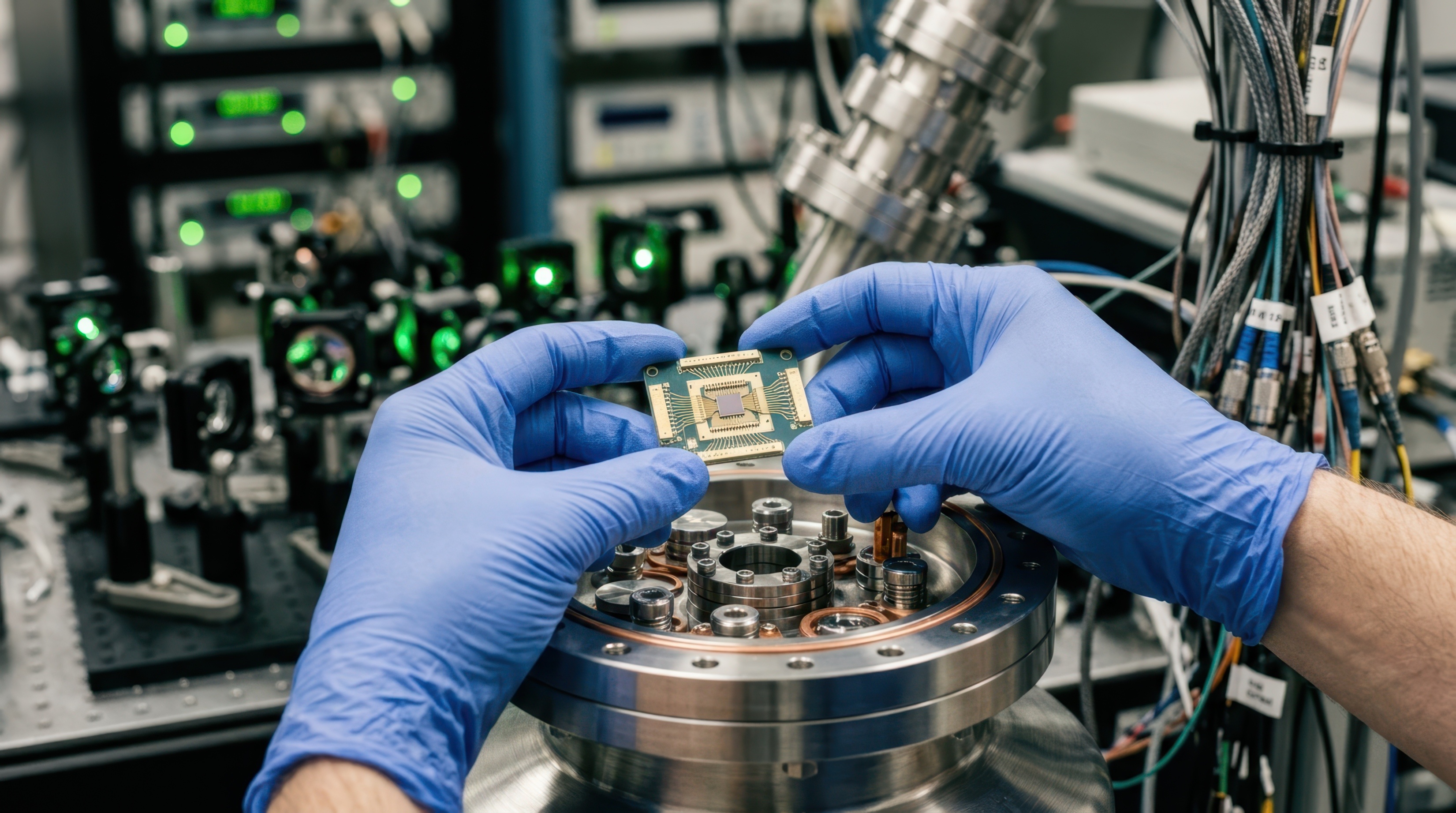
- Facility and Equipment: Advanced manufacturing and testing of quantum chips and components, alongside specialized cleanrooms, cryogenics and equipment.
- Workforce Development: Technician training, expertise, CUNY associate and certificate programs for quantum technicians, internships, bootcamps, and VR learning.
- Entrepreneurship Support: Resources to help startups incubate and commercialize technology as well as integrate with NYU’s broader entrepreneurial ecosystem.
QFab is expected to reach more than 35,000 New Yorkers in its first 10 years of operations, including over 5,000 students through undergraduate and graduate school programming, summer bootcamps for NYCPS students, internship programs, and a new certificate program launched at select CUNY schools.
As part of its work, QFab is projected to incubate nearly 50 companies as well as provide services to 50 newly formed startups. QFab will help companies turn prototypes into products and provide support from NYU’s academic and entrepreneurial programs.
Finally, Mayor Mamdani announced an unprecedented public-private partnership that will ensure that when publicly backed technologies succeed, the public benefits as well. To ensure the city’s priorities are continuously reflected in the future of QFab, the city will receive three seats on the QFab Executive Advisory Board.
Additionally, when intellectual property is created at QFab using tools the city funded, the city will receive 15% of the NYU Central Administration's proceeds resulting from the intellectual property — including equity, royalties, milestone payments and licenses of the patent.
This agreement will not only ensure that the city government can shape the direction of future technologies in New York City and share in the revenue that results from public investment but help set a new national model for how city governments support emerging industries.
“I’m proud to have secured federal funding for NYU to invest in state-of-the-art quantum technology equipment,” said Senator Schumer. “This investment, alongside the city’s investment in a new NYU quantum technology lab, will strengthen New York’s position as a national leader in this emerging field. The cutting-edge research it supports will benefit finance, semiconductor, and advanced manufacturing companies across the state, helping drive innovation and building the technologies of the future.”
“Today’s landmark $284 million private-public financing announcement guarantees that Manhattan will be the world’s pre-eminent global capital of quantum computing for decades to come,” said Manhattan Borough President Brad Hoylman-Sigal. “Quantum computing offers unparallel opportunities to revolutionize our economy and way of life, and I’m elated that NYU, the Mamdani administration, NYCEDC, CUNY, and NYC Public Schools are taking a proactive approach to ensure our city’s students are best equipped to meet this moment. Congratulations to Mayor Mamdani, Deputy Mayor for Economic Justice Julie Su, NYCEDC President and CEO Anthony Shorris, and NYU President Linda Mills on this transformative achievement.”
“New Yorkers deserve access to the jobs and opportunities emerging industries create,” said Assemblymember Grace Lee. “I thank Mayor Mamdani for investing in our city’s future and ensuring the public shares in the benefits of this technology. I am also grateful for NYU’s leadership in advancing quantum technology and for bringing CUNY and public school students into the research and innovation that will shape this industry’s future.”
“Providing New York City students, researchers, and companies with access to a Quantum Fabrication Facility (QFab) and specialized equipment through NYU will allow our City to engage, shape, and grow with this emerging technology,” said Assemblymember Deborah Glick. “With educational opportunities for City University of New York (CUNY) and New York City Public Schools (NYCPS) students, we assure that our communities collectively participate in the testing and expansion of quantum technology. Mayor Mamdani and New York City Economic Development Corporation’s investment expresses the City’s commitment to supporting New Yorkers as we engage with technological advances.”
“The City’s future depends on the success of our Higher Education institutions,” said Council Member Rita Joseph, Chair of the Council Committee on Higher Education. “Today's announcement ensures New York and New Yorkers stay ahead of the game. Partnerships like these prove that government's approach to innovation does not need to be black and white, all or nothing - there are infinite possibilities in between. Providing New Yorkers a cutting-edge education and preparing them to lead tomorrow's workforce is how we create the economic stability New Yorkers deserve.”
About NYU Global Science and Technology
NYU Global Science and Technology connects expertise across the University's schools, campuses, and global sites, and builds the partnerships that carry scientific work from discovery into use. Led by Executive Vice President Juan de Pablo, the office supports institutes working across quantum science, health, climate, artificial intelligence, and entrepreneurship, and works to make NYU one of the world's preeminent institutions for science and technology.